
Thank you to NemiTek for Driftskonferansen
We had a stand and a talk at Driftskonferansen 2026, and our thanks go to NemiTek for the opportunity.
Read moreLaster...
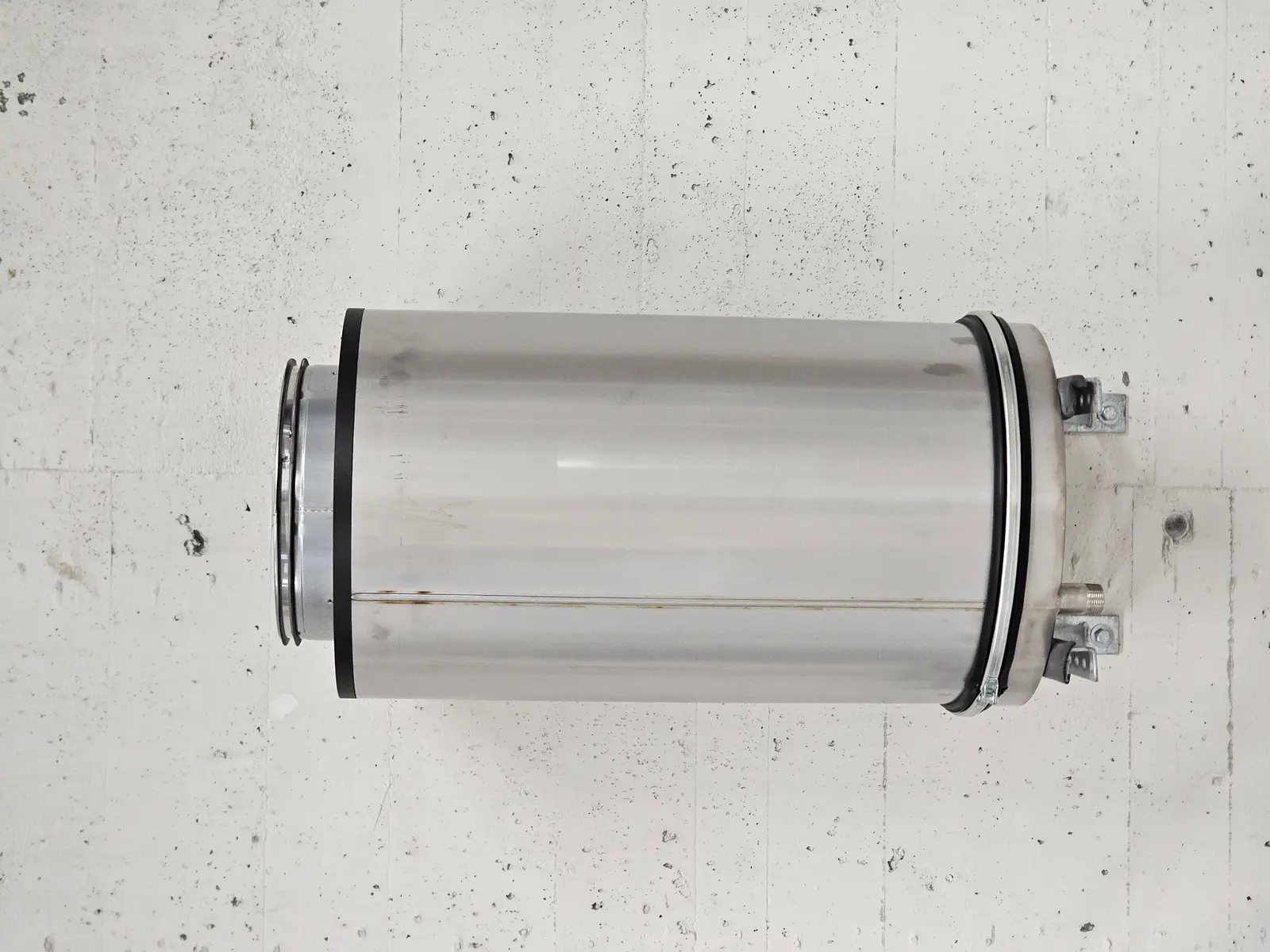
Lynx Kitchen is the only commercially documented grease separator that keeps ventilation ducts chemically clean — without duct cleaning.
Stay up to date with the latest projects, installations and announcements from Lynx Kitchen.
We had a stand and a talk at Driftskonferansen 2026, and our thanks go to NemiTek for the opportunity.
Read moreKitchen exhaust is exempt from the heat recovery requirement. The only documented reason is grease. Two new calculators show what the exemption costs per year, and what it costs to remove the cause.
Read moreAfter fourteen months, Caverion Norge opened four Lynx units mounted downstream of a premium hood at Oslo Airport Gardermoen. They had captured over six kilos of grease — grease that would otherwise have built up in the duct network. The spiral duct was visually clean anyway.
Read moreReferences and partners


Most systems are built to treat grease that has already entered the duct. Lynx removes it at the source. We're open about what Lynx does not do: odour is not handled mechanically. When odour control is required, we combine Lynx with a Camfil carbon filter – clean air with no ozone added to the airflow.
* UV/ozone breaks down grease in the air but does not prevent grease from first entering the duct. Lynx prevents grease from entering at all. No competitor product names are given; the columns describe types of technology.
Run the numbers
Grease in the exhaust air is why commercial kitchen exhaust is exempt from the heat recovery requirement. The heat goes straight out through the roof. Two calculators show you what that heat is worth — and what it takes to get it back.
A medium kitchen at 3,600 m³/h throws away around 63,575 kWh a year — worth roughly 12,700 EUR at current energy prices.
Open the calculatorsLynx Kitchen is a self-cleaning centrifugal grease separator installed in the kitchen exhaust airstream, upstream of the duct and fan. It does not replace the extraction fan, the duct or any fixed fire-suppression system, and it does not alter their classification. Its contribution to fire safety is structural: it captures 100 percent of the liquid fat droplets from the airstream continuously, so the duct stays free of the combustible deposits that cause kitchen exhaust fires.
A fail-open option is in development. Under normal operation the unit has a pressure drop of 180 Pa. When temperature exceeds a defined threshold in a fire, a heat-sensitive element opens the unit and the pressure drop falls toward zero. Airflow and smoke evacuation through the unit increase at exactly the moment maximum extraction is required. Conventional metal mesh filters do the opposite: they stay in place and restrict flow during a fire.
The sections below describe how the system relates to each country's framework, and to the marine and aviation use cases. They are written for the consulting engineer or the ventilation designer who needs a quick, accurate entry point.
Grease in ventilation ducts is the root cause of fire hazards, poor energy efficiency, and health risks. Lynx Kitchen solves all three.
separation of liquid particles down to 0.3 µm
uninterrupted operation, camera-documented — El Rincon
centrifugal force vs. industry's 0.71 G
power consumption per unit
Documented benefits for your business.
Lynx Kitchen's performance is documented through laboratory measurements, field installations, and external risk assessment.
100% separation of liquid particles down to 0.3 µm
5 years of uninterrupted operation without duct cleaning, camera-documented — El Rincon, Spain (2020–)
"Other systems let grease pass through. With Lynx, the ducts are still clean after 1 year." — Oslo Airport and Caverion
Centrifugal force 75–314 G compared to the industry's passive solutions at 0.71 G
Commercial kitchens need a documented solution. Get in touch to become an authorised installer partner and secure exclusivity in your market area.

