Heat recovery from restaurant kitchens: After almost two years, the heat recovery unit has not filled up with grease
Lynx Kitchen has been tested in a ventilation system with a heat recovery unit at Oslo Airport Gardermoen for almost two years. The project is led by Avinor, and Lynx takes part with measurements. The heat recovery unit has not filled up with grease, and there were no signs of liquid grease in the ductwork. The results are as calculated. The energy calculator on lynxkitchen.com shows how much heat your kitchen throws away today. In 2027 we aim to launch a design calculator for heat recovery.
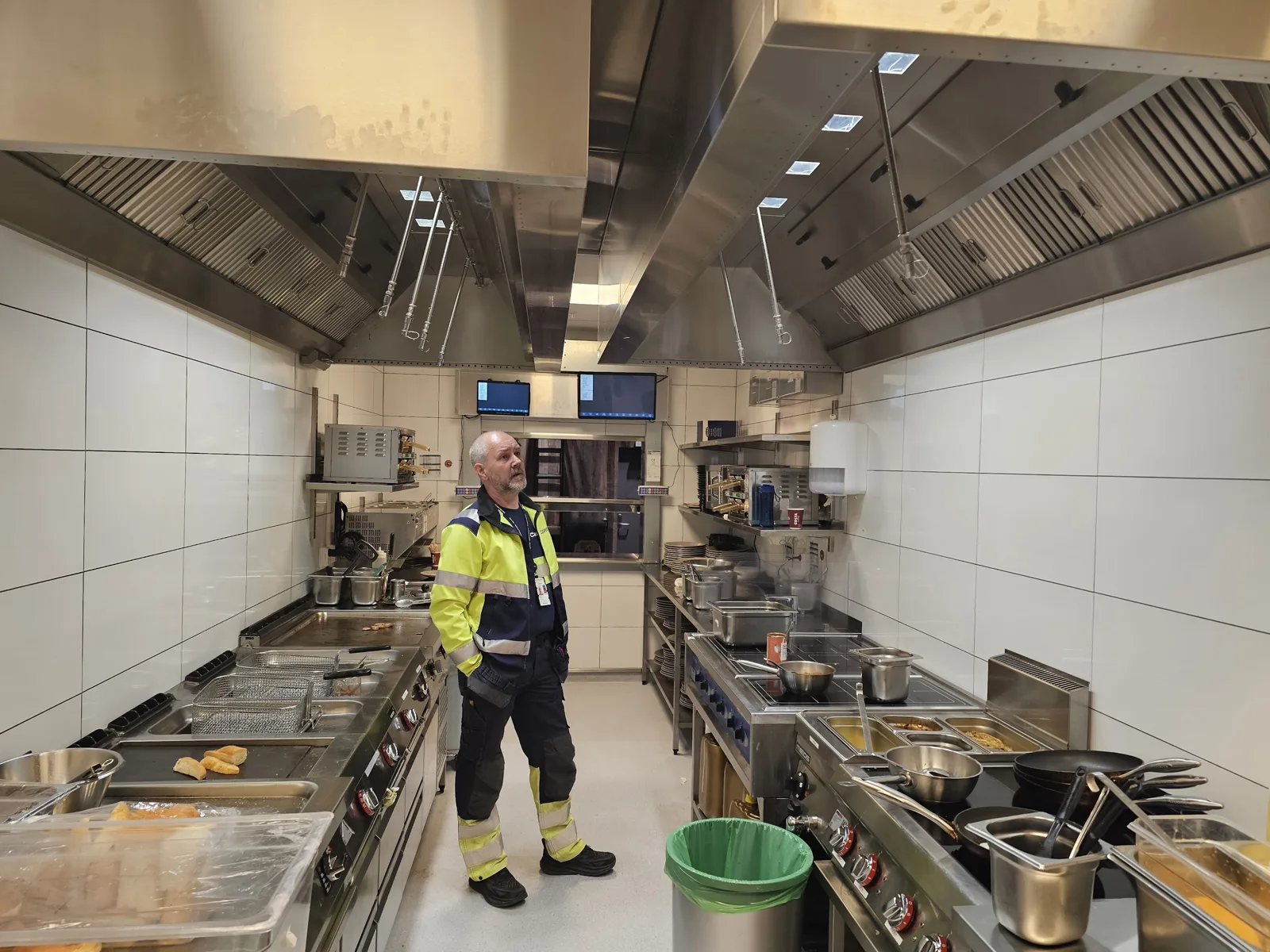
Grease is the reason why the heat in kitchen exhaust is rarely recovered. Grease from cooking settles in the heat recovery unit, and a system that clogs with grease is neither reliable nor acceptable in terms of fire safety. That is why warm exhaust air is blown straight out over the roof in most restaurants, throughout the operating day, all year round.
Avinor Oslo Airport leads a project that tests whether the heat in kitchen exhaust can be recovered when the grease is removed in the hood. Lynx Kitchen has been tested in the system with a heat recovery unit on the exhaust air, and takes part in the project with measurements. After almost two years in operation, the answer is clear: It can.
The results are as calculated
At Oslo Airport Gardermoen, the exhaust air from a kitchen hood with Lynx Kitchen has gone to the heat recovery unit in the air handling unit for almost two years. The results are very good, and they match what we calculated before the start.
The heat recovery unit has not filled up with grease. It has run without the filters in front of it needing to be replaced unnecessarily often. Filter cassettes that have to be replaced as often as every week without Lynx have lasted three to five months with Lynx in front.
At the same time, the exhaust ducts are kept free of liquid grease. The building owner therefore gets two gains from the same measure: A clean duct, and heat that can be recovered.
The trials show that heat recovery from restaurant kitchens can be a profitable setup, when the grease is removed before it reaches the duct.
The order is what matters
Lynx sits in the hood and separates out the grease droplets with centrifugal force before the air reaches the duct. Lynx can be retrofitted in all known hood types and captures 100 % of grease droplets in the liquid phase. Dry particles are not captured. They are taken by the dry filter downstream. Only after that does the air reach the heat recovery unit.
If the grease comes first, both the filters and the heat recovery unit become coated with grease, and the economics of the system collapse. If the grease is taken at the source, as Lynx does, the kitchen exhaust becomes an airflow that can be recovered like any other.
See how much heat your kitchen throws away today
The energy calculator on lynxkitchen.com/calculator shows how much heat your kitchen throws away today, and what it is worth in money and CO₂. You enter the airflow, or the hood length and the kitchen type. A kitchen under medium load with 3,600 cubic metres per hour throws away about 63,500 kilowatt hours a year. That is heat going straight out over the roof, year after year.
Lynx does not extract that energy itself. Lynx removes the grease, and the heat recovery unit in the air handling unit recovers the heat. Almost two years at Gardermoen show that this setup works.
What remains
Lynx carries out measurements in the project. Some work remains before we conclude:
- We are testing advanced cameras with AI detection of grease.
- Together with researchers from SINTEF and NTNU, we map the chemical properties of the different cooking fats used in restaurant kitchens.
A design calculator for heat recovery in 2027
We aim to conclude the work in 2027. We will then launch parts of the results as a design calculator for heat recovery. The energy calculator shows what the kitchen loses today. The new calculator will help those who want to get the heat back. It will be based on data from operation, not only on theory.
“We have long said that grease in the duct is a design problem, not a cleaning problem. Now we have almost two years of operation showing that heat recovery works when the grease is taken in the hood. The next step is to give designers a tool they can rely on,” says Sondre K. Jacobsen of Lynx Kitchen.
Contact: Sondre K. Jacobsen, Lynx Kitchen, +47 980 43 205.